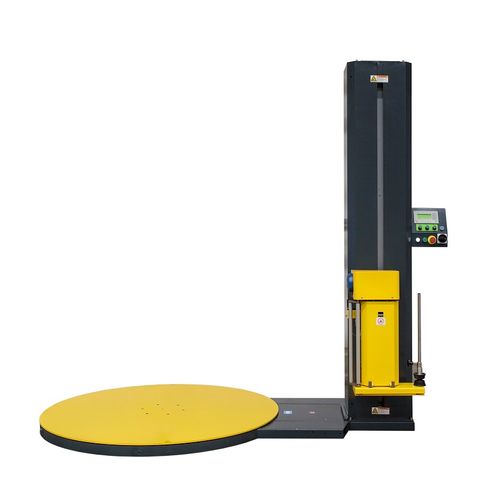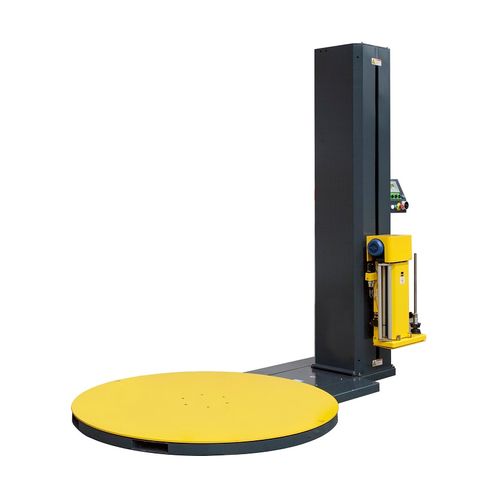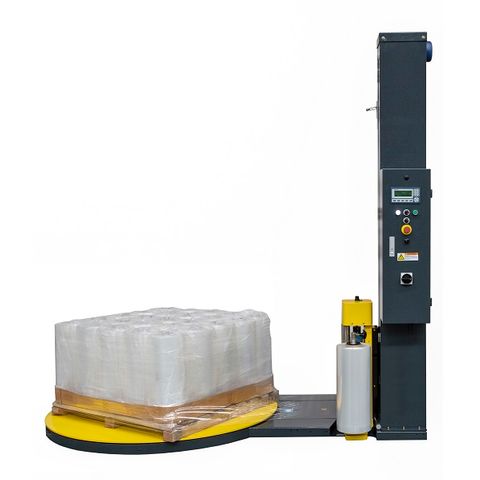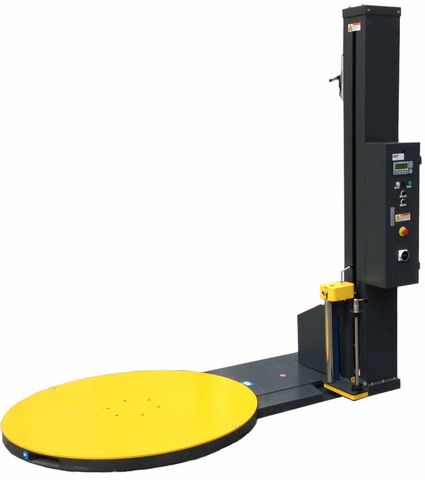
Pallet Wrappers

Pallet Wrappers

Pallet Wrapping Machines & Stretch Wrappers | Power Packaging


Pallet wrapping machines play a critical role in modern warehousing, logistics, and manufacturing operations. By automating the process of securing palletised loads with stretch film, businesses can dramatically improve load stability, reduce film consumption, and eliminate the physical strain associated with hand wrapping.

At Power Packaging, we supply a carefully selected range of pallet wrapping machines designed for Australian conditions. Whether you are wrapping a handful of pallets per day or operating a high-throughput distribution centre, the right pallet wrapper delivers consistent containment force, predictable film usage, and a measurable return on investment.

Most businesses see ROI through a combination of reduced stretch film usage, faster wrap cycles, lower labour costs, and fewer damaged pallets. When paired with the correct machine pallet wrap, a pallet wrapper quickly becomes a core piece of operational infrastructure rather than just a convenience.

Pallet Wrapping Machine Buying Guide

Choosing the right pallet wrapping machine depends on your daily pallet volume, load profile, warehouse layout, and film strategy. Below are the key factors to consider when comparing stretch wrappers.

Semi-automatic vs fully automatic wrappers

Semi-automatic pallet wrappers require an operator to attach and cut the film, which suits low to medium throughput sites. Fully automatic pallet wrappers automate the cycle, including film clamping and cutting, and are better suited to higher-volume operations where repeatability and speed are important.

Turntable vs rotary arm wrappers

Turntable pallet wrappers rotate the pallet while the film carriage moves vertically, which suits stable, uniform loads. Rotary arm wrappers rotate the film carriage around a stationary pallet, which suits light, unstable, or very heavy loads where rotation is not practical.

Load capacity and wrap height

Turntable capacity and maximum wrap height need to match your heaviest pallets and tallest loads. Allowing a small margin can help with future growth, while underspecifying can limit productivity and increase mechanical wear.

Film pre-stretch and containment force

Powered pre-stretch carriages stretch the film before application, increasing film yield and improving load containment. Compared to friction-brake machines, pre-stretch wrappers typically reduce film usage by 30 to 50% while delivering more consistent wrap tension.

Pallet Wrapping Applications by Industry

Pallet wrapping machines are used across a wide range of industries to improve safety, compliance, and transport efficiency.

  • Food and beverage: Stable pallet loads reduce product movement and support clean handling during transport and storage.
  • Logistics and 3PL: Consistent containment across mixed pallet profiles helps maintain throughput and reduce rework.
  • Manufacturing: Secure outbound pallets reduce damage and support chain-of-custody requirements.
  • Retail and distribution: Tightly wrapped pallets improve presentation and reduce store-level handling issues.

For long-term reliability, we also offer ongoing pallet wrapper servicing and maintenance to keep your equipment performing at its best.

Redline pallet wrapper comparison

Use this table to compare the practical differences between the four Redline semi-auto pallet wrappers, including film carriage type, maximum pallet weight, speed range, and key workflow features.

Key difference Redline 2000K Redline 2000B Redline 1001E Redline 1001A
Film carriage type Powered pre-stretch Powered pre-stretch (safe easy load) Electromagnetic brake Friction brake with release
Best fit if you want Faster cycle time and automatic film cut at the end of the wrap Pre-stretch efficiency with a straightforward, safe loading setup Simple tension control via electromagnetic brake for consistent wrapping Entry-level wrapper with hands-on tension control via friction brake
Maximum pallet weight 3,000 kg 2,000 kg 2,000 kg 1,500 kg
Turntable speed range 0 to 18 turns per minute (adjustable) 0 to 12 turns per minute (adjustable) 0 to 12 turns per minute (adjustable) 0 to 12 turns per minute (adjustable)
Automatic film cutter Yes No No No
Electronic eye sensor Yes Yes Yes Yes
Same position start / stop Yes Yes Yes Yes
Soft start / stop (turntable) Yes Yes Yes Yes
Extended mast and / or base Available (option) Available (option) Available (option) Available (option)
Wrap height 2,200 mm (option) 2,200 mm (option) 2,200 mm (option) 2,200 mm (option)
Turntable diameter 1,650 mm (option) 1,650 mm (option) 1,600 mm (option) 1,600 mm (option)
Turntable height 80 mm 80 mm 80 mm 80 mm
Film width and core Up to 500 mm, 76 mm core Up to 500 mm, 76 mm core Up to 500 mm, 76 mm core Up to 500 mm, 76 mm core
Film thickness range 12 to 35 microns 12 to 35 microns 12 to 35 microns 12 to 35 microns
Power supply Single phase, 240V, 50Hz, 10 amps Single phase, 240V, 50Hz Single phase, 240V, 50Hz Single phase, 240V, 50Hz
Warranty listed 12 months warranty on parts and labour 12 months warranty on parts and labour 12 months warranty on parts 12 months warranty on parts

If you share your pallet size, typical load height, load weight, and how many pallets you wrap per day, we can recommend the most suitable wrapper and film carriage for your application.

FAQs

What is the difference between powered pre-stretch and a brake carriage?

Powered pre-stretch carriages stretch the film before it is applied to the load, which helps control film usage and achieve consistent containment. Brake carriages use braking tension to control film payout and are simple to operate, but they generally do not deliver the same film efficiency as pre-stretch setups.

Do I need a 3,000 kg turntable rating?

Choose a higher maximum load rating if you regularly wrap heavier pallets or want extra margin for mixed loads. If your pallets are consistently lighter, a 1,500 kg or 2,000 kg rating may be suitable.

When does an automatic film cutter help?

An automatic film cutter reduces manual steps at the end of the wrap cycle. It is most useful when you are wrapping frequently and want to keep operator handling consistent.

Enquiry Form