Cable Ties, Wire Ties & Rubber Bands: Choosing the Right Fastener
A practical guide to bundling, closing and securing. From everyday cable ties to bag-closing wire ties and twine, here is how to pick the right one.
Quick Chooser: What You Need by Job Type
| Job | Best Fastener | Reusable? |
|---|---|---|
| Bundling cables, wiring, hoses, permanent fastening | Nylon Cable Ties | No, one-way ratchet lock |
| Closing bags, bundling reo/steel, twist-and-hold jobs | Wire Ties | Yes, can be untwisted and reused |
| Bulk bundling, hay/produce, general tie-down | Twine | No, single use, cut to release |
| Light parcel tying, quick bundling, sealing bags | Rubber Bands | Yes, stretch and release |
Cable Ties: Getting the Size and Grade Right
Cable ties look simple, but the wrong size or grade is a common cause of failed bundles and re-work. Two things determine whether a tie will actually hold: bundle diameter relative to the tie's rated range, and whether it's rated for indoor or outdoor use.
| Grade | Width | Min. Tensile Strength | Bundle Diameter Range | Typical Use |
|---|---|---|---|---|
| Miniature | 2.5mm | 8.16 kgF | 3–52.5mm | Light bundling, tight spaces |
| Intermediate | 3.6mm | 18.35 kgF | 3.5–36mm | General indoor cable bundling |
| Standard | 4.8mm | 23.45 kgF | 3.5–278mm | Most common size, used for wiring, hoses and general bundling |
| Heavy Duty | 7.6mm | 55.06 kgF | 8.5–162.5mm | Thick cable bundles, structural bundling |
| Extra Heavy Duty | 8.8–9.0mm | 55.06–81.58 kgF | 8.5–450mm | Large bundles, heavy industrial applications |
Bundle diameter range shown covers the full range of tie lengths stocked within each grade. Longer ties in the same width and grade handle larger bundle diameters. Exact length and pack quantity options are on the category page.
Natural (Indoor)
Standard nylon 66 without UV stabiliser. Suits switchboards, enclosures and general indoor bundling where the ties won't be exposed to sunlight.
Black (UV-Resistant)
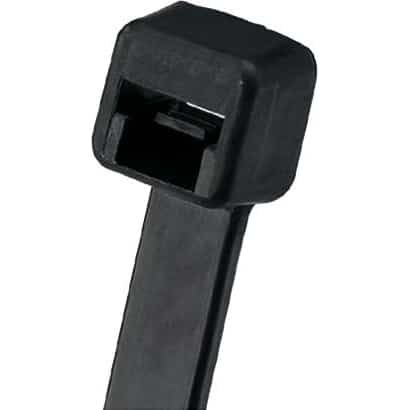
UV-resistant nylon 66. The right choice for anything exposed to sunlight long-term, indoors or out.
Temperature & Chemical Resistance
Rated for continuous operation from -40°C to +85°C, with short-term tolerance up to +110°C and a minimum installation temperature of -10°C (nylon becomes brittle below this). Good resistance to oils, greases and chloride solvents; limited resistance to acids; no resistance to phenols. Complies with UL94-V2 flammability rating, and is RoHS and REACH compliant.
Storage & Handling
Store cable ties in their original sealed bag, out of direct sunlight and away from heat sources. Optimum storage is 15–25°C at 50%+ relative humidity. Incorrect storage can affect performance even before the ties are used.
Choosing a longer tie than your bundle strictly needs is fine, since you can cut off the tail after fastening. Choosing one too short means it won't close at all. If you're not sure which grade or size suits your job, tell us in the enquiry form below.
Wire Ties & Twine: Reusable Bundling
Where a cable tie is a permanent, one-way fastening, wire ties and twine give you a reusable or easily-releasable hold. That is useful when a bundle needs to be opened and re-closed regularly.
Wire Ties
Twisted by hand or with a twist-tie tool, available from 90mm to 725mm. Common for closing bags, bundling stock, and securing reinforcement steel (reo) on site.
Twine
A lower-cost, cut-to-release option for bulk bundling, produce, and general tie-down jobs where a permanent lock isn't needed.
Rubber Bands: Fast, Reusable Fastening
For light, quick or temporary fastening, like tying off parcels, bundling paperwork or sealing bags, rubber bands are the fastest and most reusable option of the four. They're not built for load-bearing or permanent bundling, but for everyday dispatch and office use they're hard to beat on speed.
How to choose (quick checklist)
- Permanent vs reusable: one-way lock → cable tie; needs reopening → wire tie or rubber band.
- Indoor vs outdoor: any UV exposure → black UV-stabilised cable tie, not natural.
- Bundle size: measure the diameter first, then check it against the grade table above.
- Load: heavier or structural bundling → heavy-duty cable tie or wire tie, not a rubber band.
Frequently Asked Questions
What's the difference between natural and black cable ties?
Natural cable ties have no UV stabiliser and are intended for indoor use. Black cable ties use carbon black pigment, which gives them significantly better resistance to sunlight and outdoor conditions over time. If a tie will see any long-term sun exposure, choose black.
What size cable tie do I need for my bundle?
Measure your bundle diameter and match it against the grade table above. For example, a 4.8mm Standard tie covers bundles from 3.5mm up to 278mm depending on length, while a 7.6mm Heavy Duty tie suits 8.5–162.5mm bundles. It's better to size up than guess short, since a tie that's too short simply won't close.
Can wire ties be reused?
Yes. Unlike a cable tie's one-way ratchet lock, wire ties are twisted by hand or with a twist-tie tool and can be untwisted and reused, making them a good fit for bags or bundles that need to be opened and re-closed regularly.
What's the best fastener for bundling reinforcement steel (reo) on site?
Wire ties are the standard choice for securing reo on construction sites, thanks to their strength and the ability to twist them tight by hand or with a dedicated twist-tie tool.
What temperature range can nylon cable ties handle?
Nylon 66 cable ties are rated for continuous operation from -40°C to +85°C, with short-term tolerance up to +110°C. Minimum installation temperature is -10°C. Below that, the nylon becomes brittle and is more likely to crack on application.
Are your cable ties chemical resistant?
Our nylon 66 cable ties have good resistance to oils, greases and chloride solvents, and limited resistance to acids, but no resistance to phenols. They're RoHS and REACH compliant and meet the UL94-V2 flammability rating.
Not Sure Which Fastener You Need?
Tell us the job and the load, and we'll recommend the right tie, size and grade.
Prefer to talk it through? Call (02) 9725 2211